How Much Do Missed Calls Cost Your Dental Practice?
Dental practices miss 25-38% of patient calls. Each missed new-patient call isn't a lost $200 appointment — it's a lost $4,000+ lifetime relationship. Here's the real math.
VoiceAnswers Team
AI phone answering specialists for small businesses
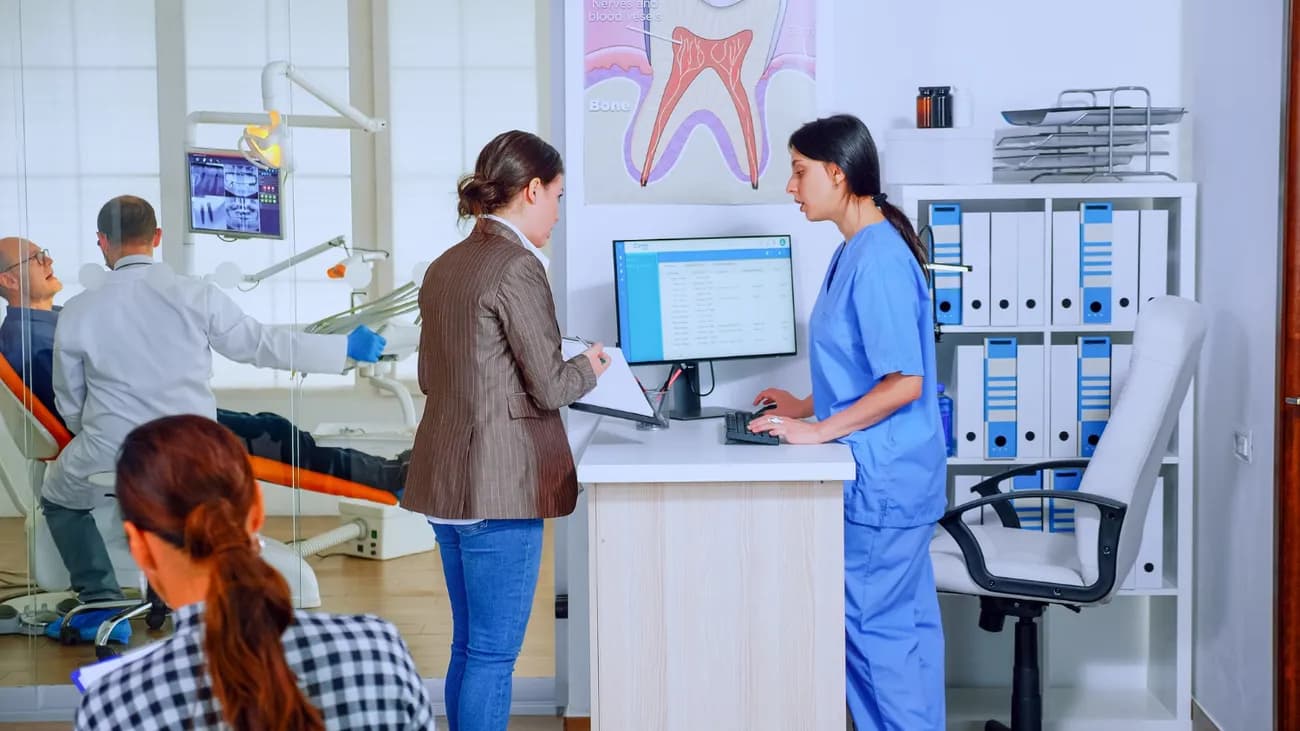
Your front desk is checking in a patient, verifying insurance on the phone, and printing a treatment plan — all at once. The second line rings. Then the third. Nobody picks up, and a new patient who found you on Google calls the next practice on the list.
This isn't a bad day — it's why dental offices are turning to AI phone answering. Call tracking data across thousands of practices shows that 25-38% of inbound patient calls go unanswered during business hours. After hours, the number is closer to 100%.
The real cost isn't a missed $200 cleaning. It's a patient relationship worth $4,000 or more over the next seven years.
How Many Patient Calls Do Dental Practices Actually Miss?
Between 25% and 38% of calls to dental offices go unanswered during regular business hours. An audit of hundreds of thousands of dental calls by Golden Proportions Marketing found that roughly 35% went unanswered — and 75% of those callers never called back.
A 2026 case study tracking 4,280 calls across 26 dental practices found a 38% unanswered rate, with new patients converting to appointments only 25% of the time even when the call was answered.
The reasons are structural, not personal:
- Front desk staff juggle check-ins, insurance verification, treatment plan printing, and phone calls simultaneously
- Lunch breaks create a 60-90 minute daily blackout where most practices send calls to voicemail
- After-hours calls (evenings and weekends) account for roughly 75% of all missed calls at dental practices
- Multiple lines ring at once during morning and post-school hours when parents schedule appointments
- Only about 14% of new patients bother leaving a voicemail when they don't reach a person
That last point is critical. Voicemail doesn't catch the other 86%. They hang up and call the next dentist.
What Is a Missed Patient Call Actually Worth?
Not every missed call is a new patient. But the ones that are cost far more than a single appointment. Here's how the math breaks down:
| Patient Type | Immediate Value | First-Year Value | Lifetime Value (7-8 years) |
|---|---|---|---|
| New patient (routine) | $200-$400 | $1,200-$2,500 | $4,000-$6,700 |
| New patient (restorative) | $500-$1,500 | $2,500-$5,000 | $8,000-$15,000+ |
| Existing patient (appointment) | $150-$290 | $500-$800/year | — |
| Emergency call | $300-$800 | Varies | Often converts to ongoing patient |
A survey of nearly 13,000 practices by Dental Intelligence found that average gross production per patient is around $4,200 over the relationship. Fee-for-service and cosmetic-focused practices see significantly higher numbers.
So when your front desk misses a new-patient call, you're not losing a $200 cleaning. You're losing a $4,000-$6,700 relationship — one you already spent $150-$300 in marketing to generate.
What Does This Add Up to Annually?
Let's run the numbers for a typical general practice:
| Metric | Conservative | Moderate | Busy Practice |
|---|---|---|---|
| Total calls per month | 400 | 600 | 1,000 |
| Missed calls (30%) | 120 | 180 | 300 |
| New patient calls missed (~20% of missed) | 24 | 36 | 60 |
| Would have booked (50%) | 12 | 18 | 30 |
| Average first-year value | $1,500 | $1,500 | $1,500 |
| Monthly lost first-year revenue | $18,000 | $27,000 | $45,000 |
| Annual lost first-year revenue | $216,000 | $324,000 | $540,000 |
Even the conservative estimate — 12 lost new patients per month — represents $216,000 in first-year production alone. Factor in lifetime value and the number roughly triples.
These aren't hypothetical patients. You already paid to attract them. Your Google Ads, SEO, direct mail, and referral programs brought them to the point of picking up the phone. The last step failed.
Why Does the Front Desk Miss So Many Calls?
It's not a staffing problem — it's a math problem. A single front desk person can handle one phone call at a time. During a typical morning rush, they're also:
- Checking in the 9:00 AM patients
- Verifying insurance for the 9:30 appointment
- Collecting copays and scheduling follow-ups for patients leaving
- Answering questions from the hygienist about the next patient's chart
When the phone rings during all of this, it goes to hold or voicemail. When two phones ring, one definitely goes unanswered. This isn't a training issue — it's a capacity issue.
The busiest call times (8-10 AM and 3-5 PM) overlap perfectly with the busiest in-office times. The front desk is maxed out exactly when the phone rings most.
Hiring a second front desk person solves the capacity problem but costs $30,000-$40,000 per year in salary alone. That's before benefits, training, and the reality that you still have zero coverage after 5 PM and on weekends — when 48% of patients prefer to book appointments, according to Zocdoc's analysis of hundreds of thousands of dental bookings.
What Are the Options for Handling Dental Office Phone Calls?
There are four common approaches. Each has real trade-offs.
Hire a second front desk person. Solves the daytime capacity problem. Costs $30,000-$40,000/year. Doesn't cover evenings, weekends, or lunch breaks. You still need a solution for after-hours calls, which is where most missed calls happen.
Use a dental answering service. A human call center answers overflow and after-hours calls. Costs $200-$500/month base plus per-call fees, typically $1.50-$3.00 per minute. Agents don't have access to your schedule and can't book appointments — they take messages. You still have to call patients back.
Add online scheduling. Lets patients book through your website. Good for tech-savvy patients, but many callers — especially older patients and emergencies — prefer or need to speak with someone. Online scheduling doesn't answer questions about insurance, treatment, or whether you're accepting new patients.
AI phone answering. An AI phone answering service picks up every call, answers common questions (hours, insurance, new patient availability), books appointments from your real schedule, and sends details to your team. VoiceAnswers handles this starting at $99/month with 24/7 coverage including evenings and weekends.
For a deeper comparison of AI vs. human options, see our analysis of AI phone answering vs. hiring a receptionist.
How Does AI Phone Answering Work for Dental Offices?
Setup takes about 10 minutes. You enter your practice details — providers, services, hours, insurance accepted, and new patient availability. Then you set up call forwarding from your existing office number.
When a patient calls, the AI answers with your practice name. It handles the most common dental office call types:
- New patient inquiries: Confirms you're accepting new patients, captures their information, and books their first appointment
- Appointment scheduling: Books, reschedules, or confirms appointments based on provider availability
- Insurance questions: Confirms which plans you accept and captures insurance details for verification
- Hours and location: Answers instantly without putting anyone on hold
- After-hours calls: Handles everything above at 11 PM on a Saturday the same way it does at 10 AM on a Tuesday
The AI doesn't access your practice management system or store patient health records. It captures appointment and intake information only — scheduling details, contact info, insurance, and the reason for the visit.
Is $99/Month Worth It for a Dental Practice?
The Starter plan costs $99/month and includes 200 minutes. A typical patient call takes 2-3 minutes, so that covers roughly 65-100 calls per month.
If the AI captures just two new patients per month who would have otherwise hung up — at an average first-year value of $1,500 each — that's $3,000 in recovered production. Against a $99 monthly cost, the math isn't close.
Even for existing patient calls, each recovered appointment is worth $150-$290 in immediate production. Four recovered appointments per month covers the cost of the plan.
The Growth plan ($199/month for 500 minutes) and Pro plan ($399/month for 1,200 minutes) are available for busier practices. All plans include the same AI features — the only difference is capacity.
Compared to a second front desk hire at $30,000+/year or an answering service at $200-$500/month that can only take messages, AI phone answering is the lowest-cost option that actually books appointments and answers patient questions.
The practice already spent $150-$300 in marketing to make that phone ring. Spending $99/month to make sure someone answers it is the highest-ROI investment in the building.
Ready to Stop Missing Calls?
VoiceAnswers picks up every call, takes orders, books appointments, and captures leads — 24/7. Starting at $99/month.
Start My Free TrialNo credit card required · 14-day free trial